Confucianism
Confucianism was started by a Chinese philosopher by the name Confucius long before the Tang Dynasty. The Tang Dynasty simply revived the ideas that were implemented among the Confucian guidelines. Confucius wrote The Analects that provided guidelines of Education, Society, Politics, and Behavior. He believed that a society should mirror a family in the way roles are carried out and that everyone should respect those above them, while those above must set a good example. Confucius taught people to be compassionate and nice, avoiding extremes in behavior. According to his teachings, one must be free of greed and possessions. Thus, it influenced those in the Tang Dynasty to live modestly. “Wealth and honor are what people desire, but one should not abide in them if it cannot be done in accordance with the Way" (The Analects as quoted by “Selections from the Confucian Analects”). Under Confucianism, those seeking positions of high authority were required to take a test because it was understood that those who were qualified, would be best. Confucianism allowed the Tang Dynasty to have a very strong centralized government. People were expected to submit to the emperor, while the emperor must act properly. Government officials were chosen based on their education and performance on the civil service examinations, strengthening the government's control. The moral codes embedded in The Analects also guided the people to act justly and for the emperor to be honorable and kind. Confucianism was the basis of the Tang Dynasty's society and government, and since many officials were Confucian, the religion helped strengthen the dynasty's political power.
Buddhism
Buddhism originated in India and traveled to China as early as the Han Dynasty through Persian, Central Asian, and Indian traders along the Silk Road. It reflected the teachings of a man named Buddha who spent his life in prayer. Buddhism had a different outlook on the afterlife than other religions. It believed that the soul was not permanently attached to its human host, therefore, when a human dies, it is reborn into another being based on the way the human lived. The goal of Buddhism is to achieve nirvana, or the state of enlightenment which is free of ignorance, greed and hate. The Four Noble Truths of the religion were its main pillars. They stated that life is suffering, which is caused by desire. In order to free oneself from suffering, one must be free of desire and to get rid of desire, one must follow the eight-fold path. This path consisted of eight rights, right views, right resolve, right speech, right action, right livelihood, right mindfulness, right effort, and right concentration. After the Han Dynasty's ruin, China was in a period of political instability. Buddhism promised a relief from that, viewed as a religion of salvation, and as a result, monks held high positions of authority. When China was reunified through the Tang Dynasty, Buddhism peaked. During Empress Wu's reign, which strengthened Buddhism for the purpose of weakening growing Daoists, Buddhism grew and spread with great success. Nearing the end of the Tang Dynasty, Confucian authorities felt threatened by the growing religion and ordered the persecution of Buddhists. Certain emperors of the Tang Dynasty despised Buddhism and vocally opposed it. This strengthened the cause of the persecution. "[Buddhism] wears out the strength
of the people with constructions of earth
and wood, pilfers their wealth
for ornaments of gold and precious objects, causes men
to abandon their lords and parents for the company of teachers, and severs man
and wife with
its monastic decrees" (Emperor Wuzong as quoted by “Selection from Emperor Wuzong’s Edict on the Suppression of Buddhism”). As a result, tens of thousands of Buddhist temples were demolished and over 200,000 monks' and nuns' lives were slain. Although peaking and declining within the years of 618-907 AD, Buddhism held a strong influence on its people. As mentioned before, Buddhism provided salvation to those who had felt the burden and instability of the fall of the Han Dynasty. It also promised a better life after death if the person had lived a selfless life. Therefore, many people were influenced to act morally and for the good of others. Many men left the fields to live a monastical life, and since the production of food relied on men, this angered many officials. Also, art prospered under Buddhism because it was a form of expression and many great poets, artists and sculptors arose from the Tang Dynasty.
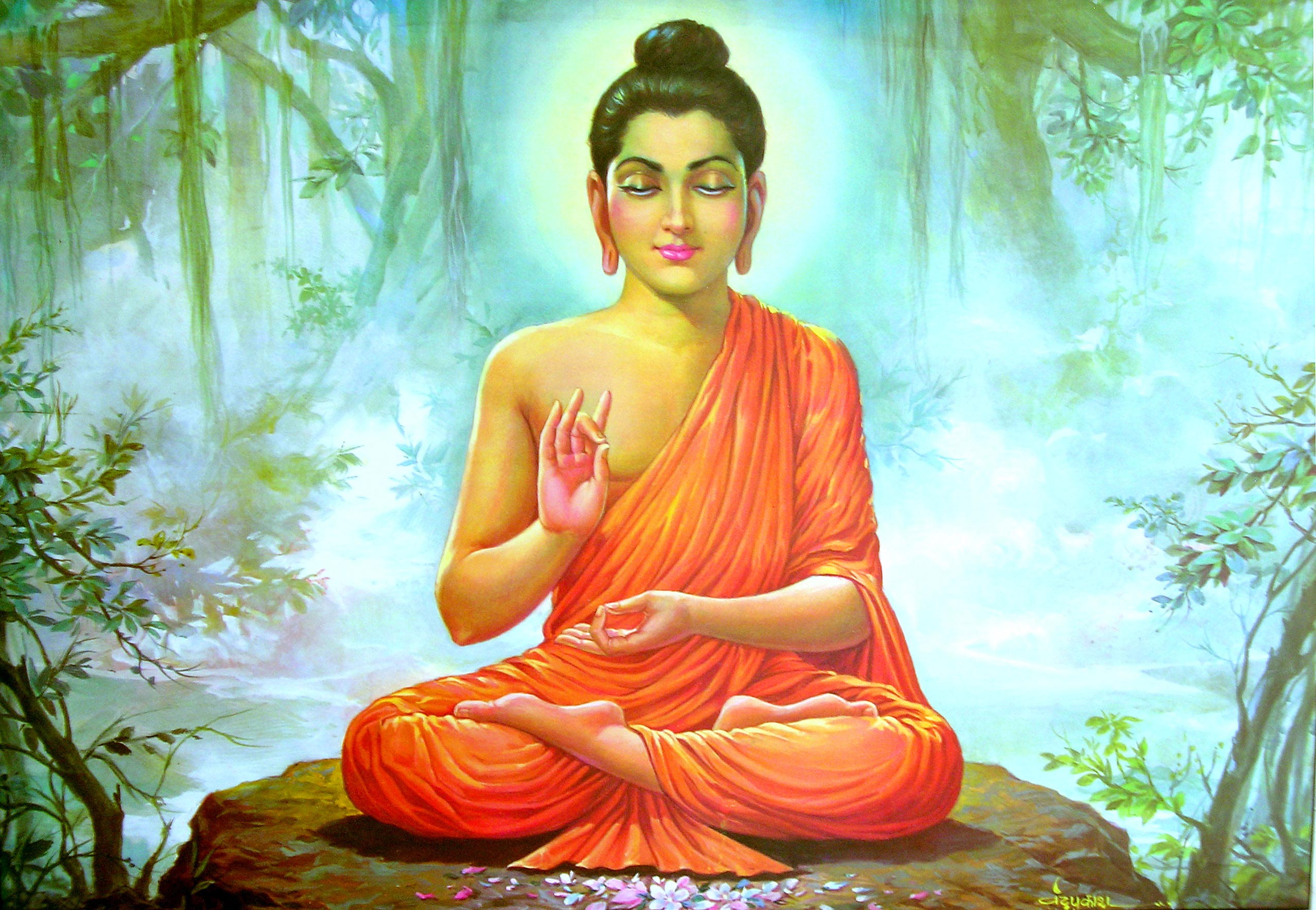 |
| Buddha http://www.wellhappypeaceful.com/wp-content/uploads/2012/04/buddha.jpg |

No comments:
Post a Comment